

What if your bookkeeping could do more than record what has already happened? With practical cash flow management advice Perth small businesses can turn those records into a clearer picture of what is coming in, what is going out and when. That matters when customer payments arrive late or income varies between busy periods, while bills and other commitments still need to be met.
It’s understandable to feel uncertain when you can’t tell whether upcoming income will cover what’s due. A cash flow forecast based on your business’s actual payment patterns can help you spot a likely shortfall earlier and consider your options with more time. It can also make everyday decisions feel less like guesswork.
This guide explains how to build and update a useful cash flow forecast, which figures to include and how to review the results alongside your bookkeeping. You’ll also see how regular cash flow reviews can support decisions about upcoming commitments and business growth. The aim is a steady routine that gives you more clarity and confidence, not another complicated task to manage.
Key Takeaways
- Understand why reported profit doesn’t always mean cash is available to meet bills and commitments today.
- Build a forecast from bookkeeping records, invoices, bills, payroll commitments and known tax obligations.
- Follow up invoices consistently and keep expected receipts visible, without assuming customers will pay sooner.
- Include GST, PAYG withholding and superannuation commitments in your planning, using current ATO guidance for compliance details.
- Bring bookkeeping and business advisory insight together in regular reviews to make cash flow easier to manage.
Why cash flow management matters for Perth small businesses
A strong sales month doesn’t automatically mean there’s enough money in the bank to cover today’s commitments. Cash flow is about timing: when money reaches your business and when payments leave it. Keeping that timing visible helps you plan for suppliers, staff, tax obligations and operating costs without relying on a profit figure alone.
Cash flow tracks when money enters and leaves your business; profit measures income earned after expenses, whether or not the cash has arrived or been paid yet.
This distinction is a practical starting point for cash flow management advice Perth business owners can use. Look beyond what the accounts say you earned and consider when funds will actually be available. A cash flow forecast maps expected receipts and payments over time, making potential gaps easier to spot.
Cash flow and profit are different measures
A sale made on credit can appear in your business records before the customer pays. Meanwhile, supplier bills, wages and other operating costs may fall due on set dates. If several payments are due before customer invoices are settled, your business can experience a temporary cash shortfall even during a profitable period. The timing matters as much as the total.
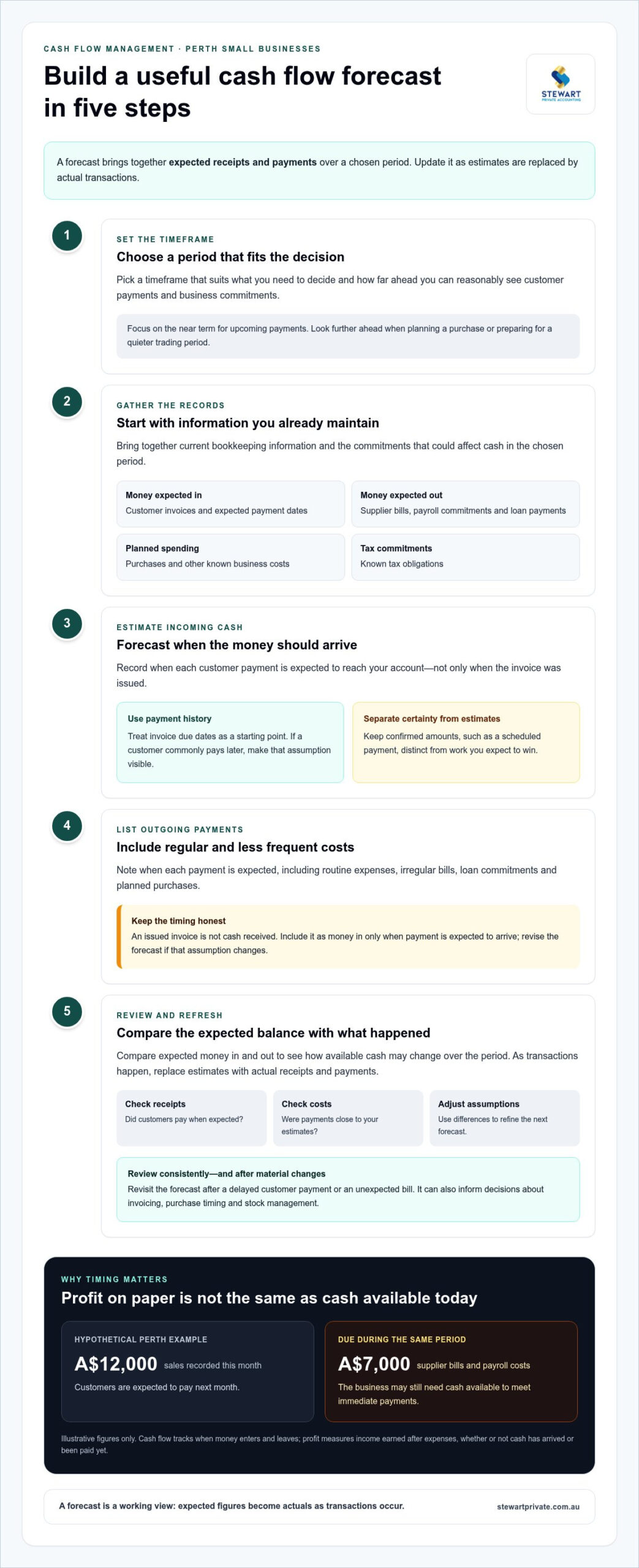
Hypothetical Perth example: A local business records A$12,000 in sales for the month, but customers are expected to pay next month. During the same period, it has A$7,000 in supplier bills and payroll costs to meet. The business may be profitable on paper, yet still need enough available cash to cover those immediate payments. The figures are illustrative only.
Why Perth businesses can experience uneven cash flow
Your payment cycle depends on your business, not simply its postcode or industry. Compare the payment terms you offer customers with the dates your suppliers expect payment. Is there enough time for customer funds to arrive before your own bills fall due? Mapping these dates can help you identify where cash flow pressure starts.
Then consider your trading pattern. Do sales rise or ease at particular times of year? Does a project require you to pay for materials or labour well before the client’s final payment? Seasonal demand and project milestones can create uneven cash movement, but the pattern will be specific to your business.
Review your records and note when customer payments typically arrive, when larger bills tend to land and which periods are quieter. This isn’t about assuming every Perth or Western Australian business faces the same cycle. It’s about understanding your own rhythm so you can prepare for commitments before they become urgent.
How to build a useful small business cash flow forecast
A useful forecast doesn’t need to predict every detail perfectly. It gives you a structured view of expected cash movements based on the information available now, so you can notice changes and respond thoughtfully. To put practical cash flow management advice Perth business owners can use into action, start with records you already maintain and follow a repeatable process.
A cash flow forecast brings together expected receipts and payments over a chosen period, then updates as estimates are replaced by actual transactions.
- Choose a period. Pick a timeframe that suits the decisions you need to make and how far ahead you can reasonably see customer payments and business commitments.
- Gather your records. Use current bookkeeping information, invoices, supplier bills, payroll commitments, loan payments, planned purchases and known tax obligations.
- Estimate incoming cash. Record when you expect each customer payment to reach your account, not just when you issued the invoice.
- List outgoing payments. Include regular costs and less frequent bills, then note when each is expected to be paid.
- Review the balance. Compare expected money in and out to see how your available cash may change over the period.
Gather realistic figures for expected receipts and payments
Use invoice due dates as a starting point, then consider each customer’s payment history. If an invoice is due on one date but a customer commonly pays later, make that assumption visible in the forecast. Keep confirmed amounts, such as a scheduled payment, separate from estimates, such as work you expect to win. This shows which parts of the picture are firm and which may change.
For outgoings, include routine expenses, irregular bills, loan commitments and planned purchases. Don’t count an issued invoice as cash received until payment arrives. If an assumption changes, update the forecast rather than leaving an outdated estimate in place.
Choose a forecast period and review it regularly
The right period depends on your business needs and how much visibility you have over future transactions. Focus on the near term to understand upcoming payments, then look further ahead when planning a purchase or preparing for a quieter trading period. Set a consistent review schedule and revisit the forecast after a material change, such as a delayed customer payment or an unexpected bill.
As transactions happen, replace estimates with actual receipts and payments. Compare the two: did customers pay when expected, and were costs close to your estimates? Those differences help you refine future assumptions. A forecast can also guide decisions about invoicing, purchase timing or stock management. The Australian Government’s strategies to improve cash flow offer practical ideas to consider alongside your own figures.
If bookkeeping records are difficult to turn into useful projections, bringing them together with business advisory insight can make regular reviews more meaningful. Stewart Private Accounting’s bookkeeping and business advisory support can help you build a clearer routine around the information your business already tracks.
Practical ways to improve cash flow timing and control
Small, consistent operating habits make cash movements easier to track and give you more time to respond. They can help reduce avoidable delays, but they can’t guarantee customers will pay faster. The aim is to improve visibility and make deliberate decisions about receipts, payments and commitments.
Keep customer payments visible and follow up consistently
Review outstanding invoices regularly and record overdue amounts in your cash flow forecast. Set a repeatable process for sending invoices promptly, checking that details are clear and following up unpaid accounts. Use agreed payment terms and communicate them plainly before work begins. A consistent routine helps you see what’s outstanding, even though the timing of a customer’s payment remains outside your control.
- Check outstanding invoices as part of a regular bookkeeping routine.
- Record expected payment dates and revise them if an account becomes overdue.
- Keep notes of follow-up actions so you know which accounts need attention.
Keep the other side of the ledger visible too. Map supplier bill dates against expected customer receipts, then review upcoming payments before pressure builds. If a payment date may be difficult to meet, speak with the supplier early and discuss whether an adjustment is possible. Don’t assume a change will be agreed; clear communication gives both parties more opportunity to plan.
Plan for recurring costs and cash buffers
List recurring expenses, such as rent, utilities, insurance and payroll, alongside less frequent costs you know are coming. Place them against expected receipt dates rather than relying on memory. This makes it easier to spot when several commitments will cluster together and whether you may need to prepare earlier or adjust the timing of a planned purchase.
A cash buffer can provide room to manage delays or unexpected costs, but there’s no single reserve amount that suits every business. Consider how predictable your income is, how quickly customers usually pay and which commitments must be met. Review the buffer as your trading pattern or responsibilities change, and don’t treat it as a substitute for a current forecast.
Day-to-day controls include tracking invoices, reviewing payment timing and updating your records. Decisions involving tax treatment, business structure or the financial implications of a significant commitment may require professional advice. First identify the cash movement you’re concerned about, then use accounting, tax planning or business advisory support where the decision calls for it. This helps you act on routine information while giving more complex choices appropriate consideration.
Plan for Australian tax obligations and changing business conditions
A forecast is more useful when it reflects commitments that don’t appear in everyday spending decisions. Depending on your business and workforce, these may include GST, PAYG withholding and superannuation contributions. Include relevant amounts and expected payment timing so you can distinguish money earmarked for obligations from cash available for ordinary operating costs.
Plan for obligations before their due dates so the cash needed to meet them doesn’t come as a surprise.
Include tax and employee-related commitments in the forecast
Use your records to identify amounts set aside or expected to be paid, and keep them visible as separate forecast entries. Don’t treat money reserved for tax or employee-related commitments as freely available for supplier bills or discretionary purchases. Exact obligations depend on your circumstances, so verify current Australian requirements and ATO guidance before relying on particular dates, reporting rules or calculations.
For employers, superannuation is a cash flow commitment linked to payroll. Include it in your planning alongside wages, while checking current requirements for payment timing and reporting. Account for GST and PAYG withholding where they apply to your business. A bookkeeping review can keep the figures grounded in current records; accounting and tax advice can help you understand how obligations apply to your situation.
Use scenarios to prepare for uncertainty
Alongside your base forecast, prepare one realistic alternative. For example, consider how the balance might look if a significant customer payment arrives later than expected, or if sales are lower during a particular period. Change only the relevant assumptions, then compare the resulting cash position and upcoming commitments. This tests decisions; it doesn’t predict exactly what will happen.
- Base case: Use the receipts and payments you currently expect.
- Disruption case: Delay a customer receipt or reduce expected sales to reflect a plausible setback.
- Response options: Identify costs that could be deferred, planned purchases that could be reconsidered, or supplier timing to discuss early.
Write down the assumptions behind each version, such as the expected payment date or the reason for a lower sales estimate. When circumstances change, you’ll be able to see what shifted and why, rather than relying on memory. Review the options carefully before making a decision, especially if it affects tax, payroll or a major business commitment.
For cash flow management advice Perth business owners can use, bring accurate bookkeeping together with practical business and tax insight. That gives you a clearer basis for weighing scenarios while keeping your forecast connected to your business’s actual records.
Stewart Private Accounting provides accounting, tax, bookkeeping and business advisory support to help you include tax commitments and changing conditions in practical cash flow planning. Explore cash flow planning support.
Make cash flow reviews a steady part of running your Perth business
A forecast is most useful when it informs a routine, not when it sits untouched until a cash shortfall appears. Set a recurring time to review it, then use the latest bookkeeping records to check what changed, what needs attention and which decisions can wait. A short, consistent review keeps cash visibility connected to the way you run the business.
Turn forecast reviews into practical decisions
At each review, compare actual receipts and payments with what you expected. Note why they differed, such as a customer paying later or a cost arriving earlier than planned. Then check overdue invoices and upcoming commitments before considering discretionary spending. Record decisions and who will follow them up, so the next review can start with what happened rather than relying on memory.
A simple review agenda might include:
- What changed in the forecast, and what caused the change?
- Which invoices remain unpaid, and what follow-up is due?
- Which supplier, payroll or tax commitments are approaching?
- What spending can proceed, and what should be revisited?
This routine helps you distinguish a one-off timing difference from a pattern worth addressing. If a forecast repeatedly differs from actual results, update the assumptions and consider whether the underlying process or a planned decision needs a closer look. Business performance review services can help connect financial results with the decisions and priorities that may improve performance.
Know when an adviser can add perspective
If regular bookkeeping still leaves you unsure what the figures mean for a planned decision, combining bookkeeping and business advisory insight can help. An adviser can help connect current records with choices such as timing a purchase, adjusting a plan or preparing for a quieter period. For a broader view, explore this Perth business advisory guide and the guide to what a business adviser does.
Tax commitments also influence what cash is available for other plans. If you’re reviewing how those obligations fit into wider business decisions, the practical Perth tax planning guide offers a related perspective alongside advice based on your circumstances.
For cash flow management advice Perth business owners can use, the value lies in turning accurate records into a regular, informed decision-making habit. Stewart Private Accounting’s tailored fixed-fee packages bring accounting and advisory support together, with clarity about the fees for the services included.
Make your next business decision with greater clarity
A cash flow forecast becomes more valuable when you use it to guide the next decision, not just explain the last one. Keep refining your assumptions as your business changes, and treat the process as a practical habit you can build over time. With cash flow management advice Perth business owners can turn financial information into a steadier basis for planning.
When you want support connecting your records with business decisions, Stewart Private Accounting offers accounting, tax, bookkeeping and advisory support through tailored fixed-fee packages. The Perth-based practice is led by a Chartered Tax Adviser and Registered Tax Agent with more than 15 years of public accounting and consulting experience.
Discuss cash flow planning and business advisory support with Stewart Private Accounting to find an approach tailored to your needs.
Frequently Asked Questions
Can a profitable business still run short of cash?
Yes, a profitable business can still have difficulty meeting payments if cash arrives after major costs fall due. For example, a business expanding its work may need to pay for materials or extra labour before a customer settles an invoice. That timing gap can create pressure even if the work is expected to earn a profit. Good cash flow management advice Perth businesses can use helps identify these gaps while there’s still time to consider options.
How much cash should a small business keep in reserve?
There’s no single reserve amount that suits every small business. Consider the essential costs you’d need to cover if receipts were delayed, how predictable your income is and how quickly you could reduce discretionary spending. A business with seasonal sales may need a different buffer from one with steady recurring income. Use your own payment history and commitments to set a practical target, then review it as trading conditions change.
Is cash flow forecasting useful for a new business without much trading history?
Yes. A new business can start with estimates based on confirmed customer orders, supplier quotes, planned opening costs and expected payment terms. Mark uncertain figures clearly rather than treating them as guaranteed income. Compare your expected case with a more cautious version, such as slower sales or higher initial costs. As trading begins, use actual receipts and payments to replace assumptions and make later forecasts more grounded.
What happens if a major customer pays later than expected?
A late payment can affect more than the invoice itself if you were relying on it for a particular commitment. Update your cash outlook using a revised payment estimate, then check which payments are due before the customer is likely to pay. Contact the customer to clarify timing and consider which planned costs can wait. If one customer represents a large share of your income, review that exposure in future planning too.
Can accounting software create a reliable cash flow forecast on its own?
Not on its own. Accounting software can organise transaction records and help you see invoices and bills, but the forecast still depends on the assumptions entered, such as when customers are likely to pay and when costs will be incurred. Check that expected dates reflect actual payment patterns, and update estimates as circumstances change. Reviewing the figures alongside your bookkeeping can help connect the data with business decisions.
How does GST affect cash flow for an Australian small business?
For a business registered for GST, amounts collected on taxable sales may include money that will need to be accounted for through its tax obligations. Treating all receipts as available for everyday spending can leave less cash than expected when a payment is due. Record GST-related amounts separately in your planning and check current Australian Taxation Office guidance for how GST applies to your circumstances, including reporting and payment requirements.
Should a sole trader manage cash flow differently from a company?
The basic practice of tracking expected receipts and payments applies to both, but the business structure affects how you should record and handle funds. A sole trader and a company have different tax and legal arrangements, so avoid assuming that money can be moved or used in the same way. Keep business transactions clearly recorded, and seek accounting or tax advice about drawings, wages or other payments relevant to your structure.