

What if financial anxiety eases not by solving every business problem at once, but by making the next decision clearer? When available cash and upcoming obligations feel uncertain, planning can become difficult and financial administration may seem harder to manage. Seeking financial anxiety help for entrepreneurs WA can start with understanding what’s creating that uncertainty, not blaming yourself for feeling under pressure.
If you’re carrying these concerns while running a business, you’re not alone in finding the numbers difficult to face. This guide will help you identify the practical pressures behind the anxiety, take manageable steps towards clearer finances and understand where to find support in Western Australia.
We’ll cover ways to organise your records, review cash flow and prepare for upcoming obligations, along with WA support options that may suit your circumstances. Accurate bookkeeping and regular financial reviews can give you a steadier picture of your business and help you make decisions with greater confidence.
Key Takeaways
- Uneven income, overdue invoices, bills, tax obligations and unclear cash flow can all contribute to financial anxiety. They don’t make it a personal failing.
- Bring bank balances, invoices, bills, payroll and tax records together to see what’s due and choose one manageable next step.
- Bookkeeping, accounting, business advisory and financial counselling serve different needs. Knowing the difference can help you identify the right kind of support.
- Use a simple four-week plan to organise records, clarify an obligation and review your progress without trying to solve everything at once.
- Financial anxiety help for entrepreneurs WA can include clearer bookkeeping, considered tax planning and practical business advice.
Financial anxiety for entrepreneurs in WA: what may be driving it?
Financial anxiety is the worry and tension that can arise when you’re unsure whether business income will cover upcoming costs and commitments. It describes an experience, not a diagnosis or a judgement about your ability to run a business. The broader idea of economic anxiety also recognises how uncertainty about financial security can affect people’s wellbeing.
For a WA business owner, the pressure may come from uneven income, overdue invoices, regular bills, tax obligations or records that don’t show a clear cash flow picture. The causes can shift as the business changes. A start-up may be waiting for reliable income; a growing business may be managing higher costs and new commitments; seasonal trading can make quieter periods harder to predict. When several figures are uncertain at once, each unknown can feel more pressing.
These pressures don’t mean your business has failed. They may be a signal that you need a clearer picture of what’s happening and suitable support. Seeking financial anxiety help for entrepreneurs WA can begin with identifying which parts of the financial picture are unclear, rather than treating the worry as a personal failing.
How financial uncertainty shows up in business decisions
When the numbers feel unclear, you might put off opening accounts, delay a decision about spending or repeatedly check how much money is available. Others may focus on urgent payments while postponing planning. There’s no single response.
Unclear or outdated records can make it harder to see which invoices are unpaid, what bills are due and how much is available for upcoming commitments. That uncertainty can narrow your focus to the next immediate concern. You don’t need to solve everything at once. Start by noticing which decision feels difficult and what information would help you make it.
Business pressure and personal wellbeing are connected
Business concerns can follow you home. Worry about cash flow or obligations may make it harder to sleep, concentrate on daily tasks or be present with family and friends. The effect varies from person to person, but distress that continues or interferes with daily functioning deserves attention.
Business finance support and mental health support have different roles. Bookkeeping, accounting and business advice can help clarify financial information and inform business decisions. They aren’t treatment for anxiety or a substitute for qualified wellbeing care. If distress is affecting your day-to-day life, consider speaking with a qualified health professional. You can seek that support alongside practical help to understand your business finances.
How to regain financial clarity when business money feels overwhelming
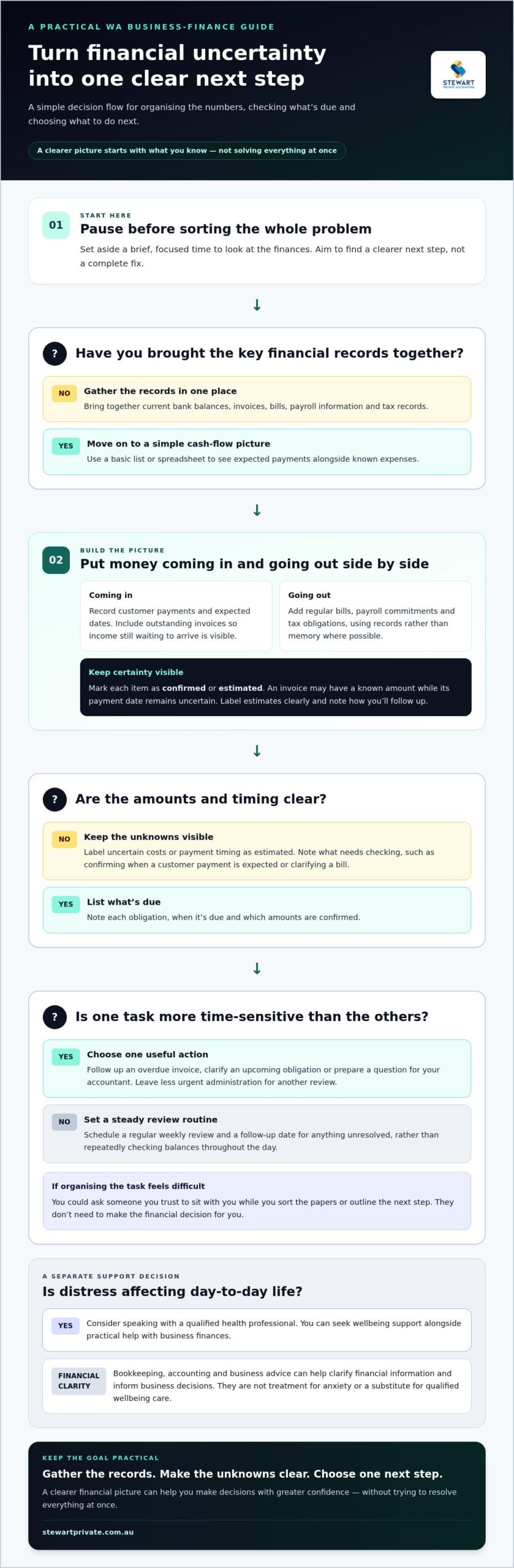
When business finances feel like too much to sort through, aim for a clearer next step rather than a complete fix. A short, orderly review can help separate what you know from what still needs checking.
- Pause: Set aside a brief, focused time to look at the finances without trying to solve every issue at once.
- Gather records: Bring current bank balances, invoices, bills, payroll information and tax records together.
- List obligations: Note what’s due, when it’s due and which amounts are confirmed.
- Choose one next action: Follow up an overdue invoice, clarify a bill or prepare a question for your accountant.
This process makes financial anxiety help for entrepreneurs WA more practical: it turns a general sense of uncertainty into specific items that can be checked, discussed or acted on.
Build a simple picture of cash coming in and going out
Use a basic list or spreadsheet to bring expected payments and known expenses into one view. Record customer payments alongside their expected dates, and include outstanding invoices so you can see which income is still waiting to arrive. Add regular bills, payroll commitments and tax obligations, using records rather than memory wherever possible.
Mark each item as confirmed or estimated. An issued invoice, for example, is a known amount, but its payment date may still be uncertain. If you’re estimating a cost or waiting for a customer to confirm timing, label it clearly and note how you’ll follow up. This keeps estimates visible without presenting them as settled facts.
Choose one useful action for the next few days
Once the list is together, identify the most time-sensitive task. That might be confirming when a payment is expected, clarifying an upcoming obligation or raising a payroll question. Leave less urgent administration for another review. Completing one action can give you useful information for the next decision.
If you plan to speak with an accountant, bookkeeper or support service, prepare the relevant records and write down your questions first. If stress makes organising the task difficult, ask someone you trust to sit with you while you sort the papers or outline the next step. They don’t need to make the financial decision for you.
Rather than checking balances throughout the day, set a regular weekly review and a follow-up date for anything unresolved. A steady routine makes it easier to notice changes without repeatedly revisiting the same uncertainty. If you’d value help turning records into a clearer financial picture, bookkeeping and accounting support can provide a practical starting point.
Which financial anxiety support is right for a WA entrepreneur?
The right support depends on what’s causing the pressure. Trouble keeping records current calls for a different response from debt concerns or distress affecting your wellbeing. These forms of help can work alongside one another, but each has a distinct purpose.
| Support | What it can help with | Consider it when |
|---|---|---|
| Bookkeeping | Organising transaction records and keeping accounts up to date. | Records are behind, transactions are hard to track or you need a clearer view of business activity. |
| Accounting and tax advice | Understanding financial information, tax obligations and planning questions. | You need help interpreting accounts or preparing for tax-related decisions. |
| Business advisory | Reviewing financial information and considering practical business decisions. | You want to assess options using a clearer view of how the business is performing. |
| Financial counselling | Support with personal financial difficulty and debt-related concerns. | Debt pressure is affecting your personal finances or feels difficult to manage. |
When accounting, bookkeeping or business advice may help
Bookkeeping can help organise business transactions and keep records current, so you’re not relying on memory to understand what has come in or gone out. Accounting and tax advice can help clarify obligations and planning questions using your financial records. Business advisory can help you consider what the information means for decisions such as managing costs or planning ahead. These services address business finances; they don’t replace personal financial counselling or mental health care.
WA support for debt pressure and financial wellbeing
The Small Business Debt Helpline is a resource for business owners facing debt concerns. The Financial Wellbeing Collective is a WA resource for financial wellbeing support. These services offer a different kind of support from accounting, bookkeeping and business advisory.
SBDC WA, Curtin Tax Clinic and ECU Tax Clinic are other names associated with support in WA. Their services may address different needs, so identify whether your main concern is overdue records, a tax question, a business decision, debt pressure or personal distress. That first distinction can make financial anxiety help for entrepreneurs WA more focused and help you find the type of support that fits the concern.
A practical plan for managing financial anxiety over the next month
A month-long plan can turn financial uncertainty into a series of manageable tasks. Keep the scope modest: organise one set of records, clarify one obligation and decide when you’ll follow up. The aim is to build a useful routine, not to make every business or personal concern disappear through budgeting alone.
- Week 1: Gather one set of records. Choose a practical starting point, such as unpaid invoices or upcoming bills. Bring together the relevant documents and mark any missing information.
- Week 2: Clarify one obligation. Check the amount, due date and next step for a priority payment or tax matter. If you’re concerned about a payment, record the issue and include it in the questions you raise with your accountant.
- Week 3: Assign follow-up actions. Note who will handle each task and when it needs to happen. If a record is incomplete or difficult to interpret, consider whether bookkeeping or accounting support would help.
- Week 4: Review progress. Look at what’s clearer, what remains unresolved and which support would be useful next. Set a date for the next review.
Set a repeatable weekly money check-in
Choose a consistent time each week to review current balances, upcoming payments and outstanding invoices. Keep the check-in brief and use a small dashboard of figures that matter to your decisions, rather than monitoring every transaction throughout the day. Record decisions, the person responsible and the follow-up date so important tasks don’t rely on memory alone.
Use the review to update what has changed, not to judge yourself for what hasn’t been done. If a payment date or amount is still uncertain, label it as unresolved and record how you’ll seek clarification. A regular routine can help you notice issues earlier, while leaving room to adjust the plan as the business changes.
Know when to bring in additional support
If records remain incomplete or hard to interpret, a bookkeeper or accountant can help bring the information into order. For debt concerns, financial counselling may be relevant. If worry persists or affects everyday life, seek support from a qualified health professional. Financial advice and wellbeing care address different needs, and you can seek both.
For financial anxiety help for entrepreneurs WA, steady follow-through matters more than trying to fix everything in one sitting. If you’d like support keeping business records clear and using them to inform decisions, discuss bookkeeping and business advisory support.
How Stewart Private Accounting can help bring order to business finances
Once you’ve started gathering the numbers, the next challenge is making them useful. Current bookkeeping can give you a more organised view of business activity, including income received, expenses recorded and obligations coming up. With clearer records, you have a steadier base for planning and can spend less effort piecing together what has happened.
Turn business records into clearer decisions
Organised financial information can make cash flow discussions more grounded. You can consider what’s coming in, which costs need attention and what questions remain unanswered, rather than relying on guesswork. Regular financial reviews also give you a chance to raise questions as they arise, before they build into a longer list of concerns.
Accounting and tax planning can help clarify financial information and obligations, while business advisory can support you to consider practical decisions in light of that information. These services can improve visibility and support informed choices, but they can’t resolve every business challenge or replace qualified support for personal distress. They’re a practical part of managing the business, not a promise that uncertainty will disappear.
A steady, tailored relationship with a Perth accounting practice
Stewart Private Accounting is a Perth-based practice led by Bradley Stewart, a Chartered Tax Adviser and Registered Tax Agent with more than 15 years of public accounting and consulting experience. The practice provides accounting and taxation, bookkeeping, tax planning and business advisory to help owners make sense of their financial information and consider their next steps.
Support is tailored to your business needs. Fixed-fee packages cover accounting, tax and advisory services with predetermined fees, providing clarity about costs and avoiding surprise bills. The right support requirements will differ from one business to another.
If you’re looking for financial anxiety help for entrepreneurs WA, structured accounting support can make business information clearer and decisions more considered. It won’t replace mental health or financial counselling support where that’s needed, but it can provide a more orderly foundation for managing business finances. Discuss accounting support for your business and explore an approach tailored to your circumstances.
Build a clearer way forward for your business
Financial uncertainty can make it harder to plan, but it doesn’t mean you’ve failed. Start by identifying what’s unclear, bringing your records together and choosing one practical next step. A regular review can help you keep track of business activity and upcoming obligations, while the right support can help you make better-informed decisions.
For financial anxiety help for entrepreneurs WA, remember that business finance support and personal wellbeing care serve different needs. Bookkeeping, accounting, tax planning and business advisory can bring structure to your business finances, while persistent distress may call for qualified health support.
Stewart Private Accounting is led by Bradley Stewart, a Chartered Tax Adviser and Registered Tax Agent with more than 15 years of public accounting and consulting experience. Tailored fixed-fee packages are designed to provide clarity and avoid surprise bills, with support shaped around your business requirements.
Discuss a clearer approach to your business finances and consider how structured accounting support can fit your needs. Take the next step towards a clearer view of your business finances with Stewart Private Accounting.
Frequently Asked Questions
Can financial anxiety affect how I run my business?
Yes, financial anxiety can affect business decisions and daily focus. You might put off reviewing accounts, delay a purchase decision or keep checking available funds because upcoming payments feel uncertain. These responses differ from person to person, and they don’t prove your business is failing. Start by identifying what information is missing or unclear. If worry is affecting your everyday functioning, consider seeking support from a qualified health professional as well as practical business finance advice.
What should I do first if business finances feel overwhelming?
Start by pausing and gathering one set of relevant records, such as current bank balances, invoices, bills, payroll information and tax records. List immediate obligations, their due dates and which figures are confirmed or estimated. Then choose one useful next action, such as following up an overdue invoice or clarifying a payment date. Financial anxiety help for entrepreneurs WA can begin with this manageable process, rather than trying to resolve every concern at once.
Is financial counselling available to small business owners in WA?
Financial counselling resources are available in Western Australia, but the support provided can vary. The Small Business Debt Helpline and the Financial Wellbeing Collective are examples of resources for people seeking financial support. Financial counselling may help with debt concerns, while bookkeeping or accounting support addresses business records and financial information.
What is the difference between a financial counsellor and an accountant?
A financial counsellor can support people experiencing financial difficulty, including debt-related concerns and options for managing them. An accountant helps with business financial information, accounting and taxation matters, and tax planning. The roles are different and may complement each other. For example, a business owner dealing with debt pressure might seek counselling for that concern and accounting advice to understand records or tax obligations. Accounting support isn’t mental health treatment or a replacement for financial counselling.
How can a bookkeeper help when I feel anxious about business finances?
A bookkeeper can help organise transaction records and keep business accounts current, making it easier to see recorded income and expenses. Clearer records can help you prepare for a review, spot missing information and understand what questions to raise about upcoming obligations. Bookkeeping won’t remove every business challenge or treat anxiety, but it can reduce the work involved in piecing together financial activity. If distress is affecting daily life, consider qualified wellbeing support too.
What happens if my business cannot meet an upcoming payment?
If you’re concerned about meeting a payment, review the amount, due date and available records, then note the issue and the questions you need answered. Keep a record of any steps you take and the follow-up required. An accountant can help clarify the business figures or tax information involved. If debt concerns are broader or affecting personal finances, financial counselling may be relevant.
Can an accountant help me understand cash flow and tax obligations?
Yes, an accountant can help you interpret financial records, discuss cash flow and clarify tax planning questions relevant to your business. Current, organised bookkeeping gives those discussions a stronger foundation, while regular reviews can help you identify upcoming obligations and decisions that need attention. This support is practical, not a guarantee that cash flow problems will disappear. For financial anxiety help for entrepreneurs WA, clearer financial information can be one part of a broader support plan.