

Tax and bookkeeping become easier to manage when you separate business and personal spending, keep receipts and invoices together, and calendar your obligations. If you’re stressed about tax and bookkeeping, start with a regular routine and timely support: Most businesses must register for GST when their current or projected GST turnover reaches A$75,000, applying the ATO’s turnover tests. Different rules apply to non-profits and some activities, including taxi and ride-sourcing services. Check the ATO’s GST registration rules.
It’s understandable to feel overwhelmed by tax deadlines and a growing pile of paperwork. A few consistent habits can make your records clearer and help you catch missing information before it becomes a last-minute problem.
This article covers practical ways to separate expenses, plan for tax and BAS deadlines, organise receipts and invoices, and manage bookkeeping. You’ll also learn when support with GST and BAS matters may be useful, so you can bring more order to your records without making the process harder than it needs to be.
Key Takeaways
- Use a dedicated business account to keep personal and business spending easier to distinguish.
- Calendar BAS and tax obligations, and set aside funds regularly to reduce last-minute pressure.
- Store receipts, invoices and bank statements together so you can find the records you need.
- A registered BAS agent can help with GST and BAS matters, while bookkeeping support can bring more consistency to your records.
1. Separating business and personal expenses
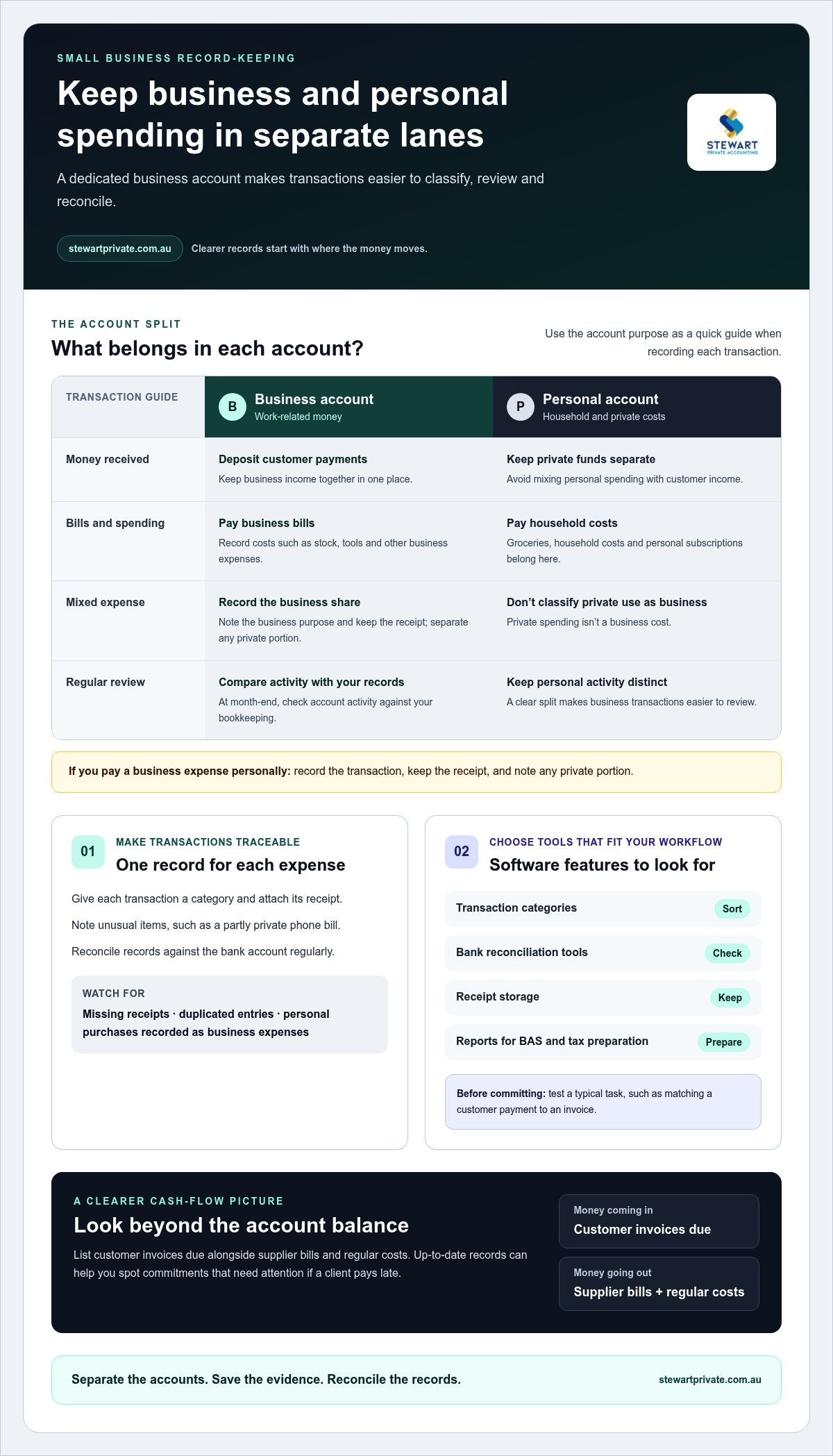
Start by opening a dedicated bank account for your business. Deposit customer payments into it and pay business bills from it. Keep household costs, groceries and personal subscriptions in your personal account. If you pay a business expense personally, record the transaction and keep the receipt. At month-end, compare the account activity with your bookkeeping records. Keeping business and personal transactions separate makes each one easier to classify and review.
What Australian bookkeeping and tax software is best for small businesses? There’s no single best option for every business. Choose software that suits the way you invoice, pay suppliers and record expenses. Look for transaction categories, bank reconciliation tools, receipt storage and reports that support BAS and tax return preparation. Before committing, test a typical task, such as matching a customer payment to an invoice.
What tax deductions can Australian sole traders and small businesses claim? Potential deductions generally relate to costs incurred for business, such as stock, tools or the business-use share of a mixed expense. Private spending isn’t a business cost. Keep the receipt, record the business purpose and separate any private portion. An accountant can review how expenses relate to your business activities when preparing your returns.
Separate records also make cash-flow challenges easier to spot. List customer invoices due alongside supplier bills and regular costs. If a client pays late, you can see which commitments need attention before using available funds. Keeping an up-to-date record of money coming in and going out helps you make spending decisions based on more than the account balance alone.
When records are disorganised, reconstructing transactions can take time away from running your business. Give each transaction a category, attach its receipt and note unusual items, such as a partly private phone bill. Reconcile your records against the bank account regularly. This helps you catch missing receipts, duplicated entries and personal purchases recorded as business expenses.
2. Managing tax obligations and deadlines
Most businesses must register for GST when their current or projected GST turnover reaches A$75,000, applying the ATO’s turnover tests. Different rules apply to non-profits and some activities, including taxi and ride-sourcing services. Check the ATO’s GST registration rules. Keep GST activity separate in your records so you can prepare accurate BAS figures. Calendar each BAS deadline as soon as you know your reporting cycle, which may be quarterly or monthly. Set aside money each month for GST, PAYG instalments and end-of-year tax, rather than relying on cash left after other bills.
Build a tax calendar that includes BAS lodgements, income tax tasks and payroll obligations. From 1 July 2026, Payday Super requires employer contributions each payday, generally reaching the employee’s fund within seven business days; specific exceptions and extended timeframes can apply. See the ATO’s Payday Super guidance. Add reminders ahead of each deadline, then allow time to gather invoices, receipts and payroll records. Bookkeeping software can help assemble information, while a calendar keeps obligations visible when business activity gets busy.
If you’re stressed about tax and bookkeeping and have overdue lodgements, list the outstanding periods and gather records for the earliest one. Reconcile transactions before preparing each overdue BAS or return, so errors don’t carry forward. Working through the periods in order shows what’s outstanding and which information needs attention.
Build a simple monthly routine: categorise new transactions, match receipts to expenses, and review income, spending and upcoming obligations. Update your calendar and set aside funds during the same check-in. A written routine can add structure when you’re stressed about tax and bookkeeping, while helping you catch missing information before the next deadline.
Schedule a broader bookkeeping review quarterly. Check income, expenses, receipts and BAS figures together, then note cash-flow changes that may affect upcoming payments. These strategies turn tax tasks into planned work rather than a last-minute scramble. If overdue records are making lodgements harder to manage, bookkeeping support can help bring transactions and reporting back into order.
Set aside funds regularly for GST, PAYG instalments and end-of-year tax payments. An accountant can prepare business tax documents and help you follow applicable tax rules. Filing early and breaking tax work into smaller tasks can make deadlines more manageable.
3. Organising receipts and invoices
Choose one central digital location for receipts, invoices and bank statements. Create folders by financial year, then group documents by type, such as sales, supplies, travel or equipment. Scan paper receipts promptly and name each file with its date, supplier and purpose. For example, “May hardware supplies” is easier to identify than “receipt 14”. A consistent naming system helps you retrieve records during a review.
Keep each document connected to the transaction it supports. Save a supplier invoice with its payment record and attach receipts to the matching expense entry. For a customer invoice, keep the invoice and evidence of payment together. These habits make it easier to trace money in and out and catch duplicate entries, missing paperwork or coding errors before they affect your reports.
What records do Australian businesses need to keep for tax, and how long? Keep records that show business income and expenses, including sales and purchase invoices, receipts, bank statements, payroll records, BAS information and tax returns. Retain them for the period that applies to the relevant tax matter. Consider the record type and circumstances before disposing of files.
Use a simple routine to capture records as you go. After buying stock or paying a bill, photograph the receipt and upload it to the correct folder. Check that the image clearly shows the supplier, date, amount and item. If a receipt fades or an invoice is misplaced, note the transaction and preserve related bank evidence. Avoid leaving a whole stack of paperwork to sort at tax time.
Once records are filed, compare invoices with bank activity and mark unpaid customer accounts. A mismatch may point to a missing payment, duplicate bill or data-entry mistake. Keep unusual transactions, such as refunds or equipment purchases, in a separate folder with a short explanation. This gives whoever prepares your accounts useful context and makes follow-up questions easier to resolve.
4. Registered BAS agent support
A registered BAS agent can advise on GST and BAS matters in Australia. This support can help you interpret transaction records, resolve GST coding questions and understand the figures behind a business activity statement. For example, if a purchase has both business and private use, an agent can help you consider its treatment for BAS purposes.
Useful support starts with clear records. Gather sales invoices, supplier bills, bank statements and notes about unusual transactions before discussing a BAS. Well-organised documents help an agent trace recorded transactions to reported figures and spot potential errors, such as a duplicated expense or an invoice assigned to the wrong reporting period.
How do you choose between DIY accounting software, a bookkeeper and a registered tax agent? Software helps you record transactions and organise documents. A bookkeeper can maintain those records, while a registered BAS agent advises on GST and BAS matters. For tax preparation beyond BAS, accounting and taxation support can help you work through the relevant records and returns.
Consider support when GST treatment is unclear, BAS figures don’t reconcile or overdue records are holding up lodgements. Bring a short list of questions and the documents connected to each issue. For example, match a disputed GST amount to its invoice and payment record. This gives the discussion a practical starting point and helps identify gaps that need attention.
During tax season, the same organised records can support tax preparation and clearer cash-flow planning. Keep a record of upcoming payments alongside BAS and tax tasks, so reporting obligations don’t become disconnected from available funds. Accountants can review financial information to identify potential issues early and support compliance. If GST or BAS questions are taking time away from your work, get help with GST and BAS matters.
Stewart Private Accounting: Accounting & Taxation Services
Stewart Private Accounting helps businesses bring structure to tax and bookkeeping when records are behind, deadlines are difficult to manage or clearer financial information is needed. Its Bookkeeping Services help keep records organised, while Accounting & Taxation Services support tax obligations and returns.
If you’re planning for changing cash flow or weighing a business decision, Business Advisory Services can help you assess the financial information involved. Expert Tax Planning can help you consider tax obligations as part of your wider plans. The right support depends on what you need to manage, from keeping accounts current to preparing for upcoming tax requirements.
If you’d like help bringing your business records and tax tasks into better order, contact Stewart Private Accounting to discuss your needs.
Choose a steady next step
If you’re stressed about tax and bookkeeping, you don’t have to resolve every loose end at once. Start by identifying the records or tax questions that need attention first. A short, clear list can turn an unclear workload into a practical conversation about priorities and useful support.
Stewart Private Accounting offers Bookkeeping Services, Accounting & Taxation Services and Business Advisory Services. These services can help you maintain business records, manage tax work and assess financial decisions. Start by outlining what is taking your time, where you feel uncertain and what you’d like to handle more consistently.
When you’re ready to discuss a practical way forward, contact Stewart Private Accounting. A considered next step can help you bring more clarity to the work ahead.
Frequently Asked Questions
What tax and bookkeeping deadlines apply to Australian individuals and small businesses?
Deadlines depend on the obligation and your reporting cycle. Individuals should track the income tax return due date that applies to their circumstances, while businesses should calendar BAS dates, which may be quarterly or monthly. From 1 July 2026, Payday Super requires employer contributions each payday, generally reaching the employee’s fund within seven business days; specific exceptions and extended timeframes can apply. See the ATO’s Payday Super guidance. Keep ATO notices and lodgement records together to track upcoming tasks and submissions already made.
How do GST, BAS, PAYG and income tax work for Australian small businesses?
GST applies to registered businesses’ relevant sales and purchases, and BAS is used to report business tax obligations. Most businesses must register for GST when their current or projected GST turnover reaches A$75,000, applying the ATO’s turnover tests. Different rules apply to non-profits and some activities, including taxi and ride-sourcing services. Check the ATO’s GST registration rules. PAYG can relate to tax withheld from employees or instalments towards income tax. Income tax is assessed through the business’s relevant tax return, using its financial records to report income and expenses.
What penalties and interest apply for late tax returns or BAS lodgements in Australia?
Late tax returns or BAS lodgements can result in penalties, while overdue tax may attract interest. The amount depends on the obligation, how late it is and whether tax remains unpaid, so there isn’t one figure for every case. If you’ve missed a deadline, identify outstanding lodgements, organise the supporting records, then address overdue filing and payment separately.