

One frustrating interaction rarely tells you it’s time to change accountants. The more useful question is whether the problem keeps recurring and whether your accountant takes practical steps to resolve it. The signs you need a new accountant often show up as a pattern: slow or unclear communication, missed follow-through, advice that arrives only when a deadline is close, or support that no longer fits the way your business operates.
It’s understandable to feel uncertain about what to do next. You may want clearer answers and more help planning for tax and cash flow, without making a major change over one frustrating mistake. This article will help you recognise persistent service problems, raise your concerns and assess whether the response leads to real improvement. You’ll also learn what to look for in accounting support that suits your current needs, and how to decide on a practical next step with a clear head, whether you’re an individual or run a business in Western Australia.
Key Takeaways
- Look for recurring service issues rather than deciding based on one late reply or mistake.
- The signs you need a new accountant may include unclear answers, repeated errors or support that no longer matches your needs.
- Record what happened and how it affected your obligations or decisions before raising concerns.
- Use a clear conversation about expectations and responsibilities to assess whether the relationship can improve.
- When considering a better fit, weigh communication, scope, relevant expertise and planning support; you can check a Registered Tax Agent through the Tax Practitioners Board.
Signs You Need a New Accountant: When Does a Concern Become a Pattern?
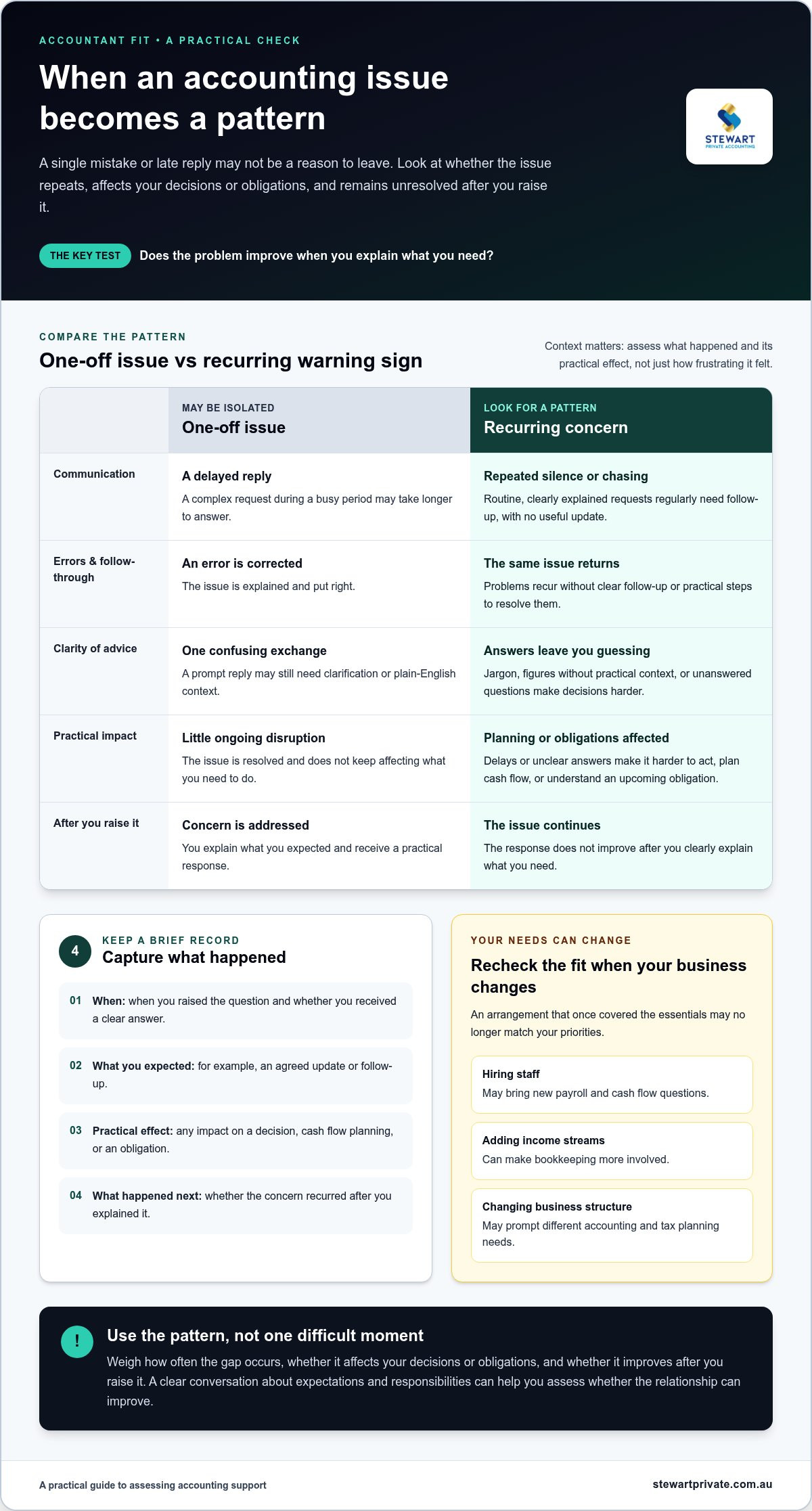
Reviewing whether your accountant still suits you is a normal part of running a business or managing your finances. Your needs can change over time, and a relationship that once worked well may need to adapt. One late reply or corrected error on its own may not be a reason to leave a long-standing accountant. The more useful question is whether problems repeat, affect your decisions or obligations, and remain unresolved after you raise them.
Accountants help make sense of financial information and support decisions about what comes next. For a general overview of the profession, Wikipedia explains that Practitioners of accounting are known as accountants. In practice, the value of that support depends on whether it helps with your circumstances and decisions. This checklist is relevant to Australian individuals and small-to-medium businesses, including Perth businesses balancing day-to-day operations with financial planning.
How to tell a one-off problem from a recurring warning sign
Context matters. A delayed response to a complex request during a busy period may be different from repeated silence on straightforward questions, especially when you need an answer to make a time-sensitive decision. An isolated error that is explained and corrected is also different from the same issue recurring without clear follow-up.
Keep a brief record so you can assess what’s happening rather than relying on a general feeling of frustration. Note:
- When you raised the question and whether you received a clear answer.
- What you expected, such as an agreed update or follow-up.
- Any effect on a decision, cash flow planning or an obligation.
- Whether the concern happened again after you explained it.
This record isn’t about assuming intent or assigning blame. It helps you distinguish a one-off from a pattern and describe the practical impact calmly. If the issue continues after you’ve raised it clearly, the response is useful information about the relationship.
Why changing business needs can affect accountant fit
A business can outgrow an arrangement that once covered the essentials. Hiring staff may bring new payroll and cash flow questions. Adding income streams can make bookkeeping more involved, while a change in business structure may prompt different accounting and tax planning needs. Your priorities may also shift from completing compliance tasks to getting useful guidance for upcoming decisions.
“Accountant fit means matching your changing needs with consistent, useful support.” If your current service still handles basic bookkeeping or compliance but leaves your newer priorities unanswered, the mismatch may call for a conversation about scope and expectations. Looking at the signs you need a new accountant means weighing the gap, how often it occurs and whether it improves when addressed, rather than reacting to one difficult moment.
Signs Your Accountant Is Hard to Reach or Leaves You Guessing
Communication problems matter when they make it harder to manage your finances, not simply because a reply took longer than you hoped. Accountants may have busy periods, and a general query won’t always need the same attention as a deadline-sensitive issue. Consider what you agreed about communication, how often you need to follow up, and whether delays leave you unable to act.
When slow responses become a meaningful concern
Ask whether you regularly have to chase routine requests that were clearly explained. One delayed response may have a reasonable explanation; repeated follow-ups with no useful update can become a service concern, particularly if you’re waiting to make a time-sensitive decision or understand an upcoming obligation.
Consider the effect, too. If you can’t confirm what information is needed, when a task is expected to be completed, or how a financial commitment may affect cash flow, planning becomes harder. Note the date, what you asked, any follow-up and the practical consequence. This helps you describe the pattern accurately without treating every delay as a warning sign.
When accounting explanations are not helping you decide
A reply can arrive promptly and still leave you guessing. Repeated jargon, figures without practical context or explanations that don’t answer your question may make it difficult to understand your financial position. You might know a figure has changed, for example, but not what that means for a planned purchase or business decision.
Ask for the answer in plain English and explain what you’re trying to decide. Then assess whether the response makes the options and relevant figures clearer. Useful accounting advice explains financial choices in terms you can use to make a decision. If the same questions remain unanswered after you’ve clarified what you need, that’s more telling than a single confusing exchange.
To assess whether communication is a genuine concern, review the pattern against the expectations you and your accountant agreed. Consider whether:
- Routine, clearly explained requests often require repeated follow-ups.
- You receive a useful update when a response or task is delayed.
- Answers address your question and explain what the information means for your next step.
- Communication improves after you raise the concern directly.
These are practical signs you need a new accountant to weigh, not an automatic verdict. If the response doesn’t improve, consider what clearer, more hands-on accounting support might look like. For Perth businesses seeking a personal approach, explore accounting and advisory support.
Signs Your Accountant Is Reactive, Inaccurate or No Longer Suits Your Needs
Repeated corrections, support that arrives only as a deadline approaches, or advice that no longer fits your business can point to a deeper mismatch. One error that is promptly explained and corrected doesn’t necessarily define the relationship. The concern grows when the same issues return, create extra work or leave you uncertain about what needs attention next.
Repeated errors and last-minute compliance pressure
Keep a record of corrections and their practical effects. Note what needed changing, when you raised it, how it was resolved and whether it led to rework, delayed decisions or uncertainty about responsibilities. This creates a fair picture without assuming why an error occurred or drawing conclusions about intent or negligence.
Also consider whether you receive support only when information is due, rather than enough guidance to prepare in a steady, organised way. Last-minute requests for records, unclear ownership of tasks or recurring gaps in bookkeeping may leave you rushing to assemble information. A single correction or busy period is different from a pattern that repeatedly creates pressure.
Compliance work focuses on meeting relevant reporting and record-keeping needs. Forward-looking advice uses financial information to help you plan for choices such as managing cash flow or considering a business decision. If you’re unsure about a tax obligation or requirement, check current information from the Australian Taxation Office rather than relying on assumptions.
When your accountant’s support no longer matches your business
Your business may have changed since you first agreed on the support you needed. Hiring staff can bring payroll questions; new income streams may make bookkeeping more involved; growth can prompt more frequent cash flow planning. An arrangement focused on routine records or compliance may no longer address the questions you need help with now.
As business complexity changes, review whether your accounting support still matches the decisions you need to make. Start with a clear conversation about what’s changed and what support would be useful. If the current arrangement doesn’t cover your priorities, the issue may be a mismatch in scope rather than poor service in every area.
These may be signs you need a new accountant, but assess frequency and impact before deciding. Ask yourself:
- Are corrections recurring, and do they create repeated rework or uncertainty?
- Does support arrive early enough for you to prepare, or mainly at the last minute?
- Have your staffing, income streams or planning needs changed beyond the current support?
Your answers can help you identify whether a concern calls for clearer responsibilities, a broader conversation about support or a change in accounting relationship.
How to Use This Accountant Checklist Before You Make a Decision
A checklist is most useful when it helps you make a measured decision, not when it turns every frustration into a verdict. Before deciding whether the signs you need a new accountant are adding up, work through the concerns in order: record what’s happening, assess its impact, raise it clearly, then review the response and any follow-through.
A practical review process for your accountant relationship
Start with specific examples rather than a broad conclusion such as “I’m not getting enough support”. Note dates, what you asked or expected, what happened, and how it affected a business or personal decision. Then compare the support you currently receive with your actual needs, including tax, bookkeeping and advisory questions.
Before speaking with your accountant, decide what a satisfactory resolution would look like. You might want clearer responsibility for providing records, more useful explanations of your financial position or a better understanding of which tasks are included in your arrangement. If fee clarity or scope is part of the concern, this fixed-fee accountant guide for Perth businesses can help you consider what to clarify.
What a constructive response should help clarify
Raise your concerns respectfully and focus on what needs to change. A useful discussion should help clarify responsibilities, expectations and next steps. A reassuring promise matters less than a practical plan you can both understand and revisit.
After the conversation, choose a reasonable review point that suits the issue and any relevant deadlines. There’s no universal timeframe for every concern. Check whether communication, work quality or the agreed support has improved by then. Keep your notes factual, whether the matter is resolved or remains outstanding. That gives you a fair basis for deciding what to do next without assuming one conversation will settle everything.
If the discussion reveals that your needs have changed, revisit the scope of support you require, such as bookkeeping, tax planning or advice on business decisions. Clear expectations can help you judge whether the relationship is improving or whether a different arrangement may fit better. For accounting and advisory support tailored to your needs, explore support for your business.
What to Look for in an Accountant Who Fits Your Next Chapter
A good fit is about more than completing tax and bookkeeping tasks. Look for accounting support that matches the way you operate now, explains financial information clearly and helps you plan appropriately. Accessible communication, a clear scope of work and relevant experience can make it easier to manage routine responsibilities and emerging business questions.
In Australia, you can check a practitioner’s Registered Tax Agent status through the Tax Practitioners Board. Verify current registration details directly, and consider whether the accountant’s experience and approach align with your needs. The signs you need a new accountant can help you define what isn’t working, but your next choice should be based on the practical support you need going forward.
Questions that help assess a potential accounting relationship
Use an initial conversation to understand how the working relationship would operate. Ask how responsibilities are divided, what work is included and how communication is handled. Discuss whether the support can address your current bookkeeping, tax planning or business advice needs.
Compare how clearly each area is explained, not just how confidently someone describes their service. A useful discussion should leave you with a better understanding of the scope, the way questions are handled and whether the support suits your priorities. Avoid basing the decision on a single promise. Look for a clear, considered fit.
How steady, personalised accounting support can bring clarity
For individuals and businesses in Western Australia, Stewart Private Accounting provides tailored fixed-fee accounting, tax and advisory support. Its fixed-fee service packages set predetermined fees for agreed services, helping clarify what the arrangement covers and avoid surprise bills. Services span compliance and bookkeeping to strategic business advice. The practice is led by Bradley Stewart, a Chartered Tax Adviser and Registered Tax Agent, with over 15 years of experience in public accounting and consulting.
Support that connects compliance with practical questions about cash flow, payroll or business decisions can help you see how accounting work relates to the choices ahead. The right scope depends on your circumstances, so focus on whether the proposed support addresses your current needs and whether the communication feels clear and collaborative.
If you’re reviewing your accounting relationship and would like to discuss what support could suit your needs, Discuss accounting support for your needs.
Choose Accounting Support That Moves With You
The signs you need a new accountant are more meaningful when they form a pattern, affect your decisions and continue after you’ve raised your concerns. Keep the conversation factual, agree on what better support looks like, and review whether communication and follow-through improve. Your needs may change as your business grows, so the right accounting relationship should keep pace.
For individuals and businesses in Western Australia considering a different approach, Stewart Private Accounting offers tailored fixed-fee accounting, taxation and advisory packages. The practice is led by Bradley Stewart, a Chartered Tax Adviser and Registered Tax Agent with over 15 years of public accounting and consulting experience.
If you’d like to discuss accounting support that fits your current needs, Discuss accounting support for your needs. A considered next step can bring greater clarity as you plan ahead.
Frequently Asked Questions
What are the most common signs you need a new accountant?
Common signs you need a new accountant include repeated communication delays, answers that don’t address your questions, recurring errors and support that arrives only when a deadline is close. A mismatch can also emerge when your business grows but your accounting support stays the same. Consider how often the problems occur, their effect on your decisions or obligations, and whether they improve after you raise them.
Should I change accountants if they make a mistake?
Not necessarily. A single mistake that’s acknowledged, corrected and followed up may not justify ending a long-standing relationship. Look for a pattern instead: repeated corrections, unclear explanations or similar issues continuing after you’ve discussed them. Record what was changed and any practical impact, such as extra work or uncertainty about a decision. This gives you a factual basis for discussing the issue and deciding what to do next.
How do I know if my accountant is being proactive enough?
Proactive support helps you understand relevant financial information before a decision or deadline becomes urgent. It might include discussing cash flow, payroll or tax planning in the context of your business, rather than only requesting records when work is due. Consider whether the advice helps you prepare and plan, and whether you know what actions to take. The support should suit your circumstances, not just cover routine tasks.
Can I talk to my accountant before deciding to leave?
Yes. A direct, respectful conversation can clarify whether a concern is understood and what can change. Bring specific examples, explain how they affected your work or decisions, and state what support you need. Agree on responsibilities and practical next steps, then review whether the response leads to improvement. You don’t have to decide during that discussion. A considered follow-up can help you assess the relationship more fairly.
How can I check whether an Australian tax agent is registered?
You can use the Tax Practitioners Board’s online register to check whether a practitioner is registered as a tax agent. Search using their name or other identifying details, and review the current registration information shown in the register. Checking registration is one part of assessing an accountant’s fit. Also consider whether their experience, communication and agreed services suit your needs as an individual or business in Western Australia.
Is it a problem if my business has outgrown its accountant?
Not automatically, but it’s a reason to review whether your current support still fits. Hiring staff, adding income streams or facing new cash flow and payroll questions can change what you need from accounting support. A service that once covered bookkeeping and compliance may not address your current priorities. Discuss the gap and whether the scope can adapt. If it can’t, consider what support would better suit your business now.
What should I look for in a new accountant?
Look for clear communication, an understandable scope of work, relevant expertise and support that suits your planning needs. Ask how responsibilities are divided and whether the work can address your bookkeeping, tax planning or business advice requirements. In Western Australia, you can also check a tax agent’s current registration through the Tax Practitioners Board. Stewart Private Accounting offers tailored fixed-fee accounting, taxation and advisory support, led by Bradley Stewart, a Chartered Tax Adviser and Registered Tax Agent with over 15 years of public accounting and consulting experience.